


Case study · Tools & knowledge · Automation & agents
One knowledge base: RFIs in minutes instead of days
- Area
- Tools & knowledge · Automation & agents
- Scenario
- Special machine builder, Schaffhausen (demo data)
- Technology
- Microsoft Graph, HubSpot API, Claude API
- Deployment
- Microsoft 365 and hosting in Switzerland, approval by sales
Starting point
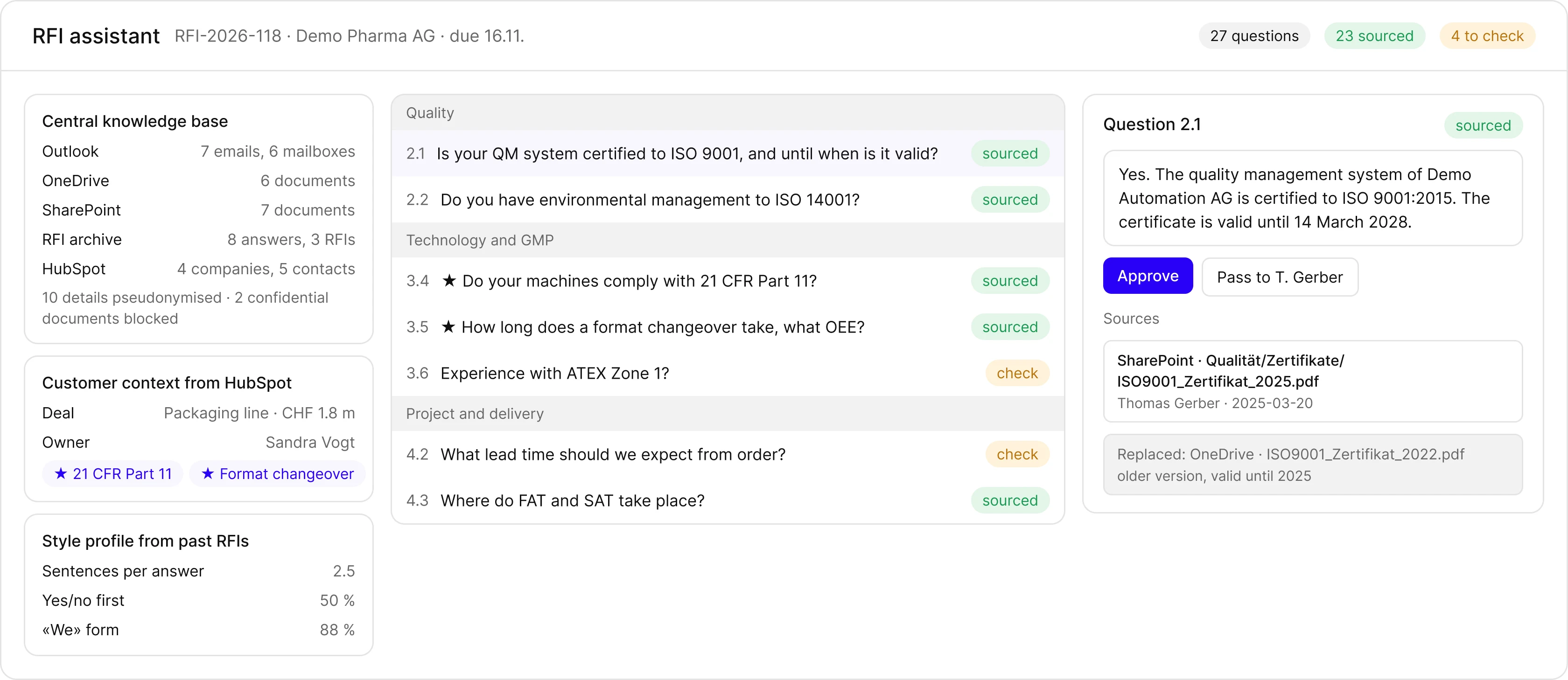
In the reference scenario, a special machine builder in Schaffhausen receives several RFIs a month from pharma and medtech customers, often with 40 to 80 questions on certificates, technology, service, IT security and sustainability. Most of the answers already exist: in emails of individual employees, on OneDrive and SharePoint, in the CRM and in previously submitted RFIs. Even so, the search starts from scratch every time, colleagues are asked, and sometimes an outdated certificate ends up in the document. A larger RFI can easily tie up two working days in sales.
The solution
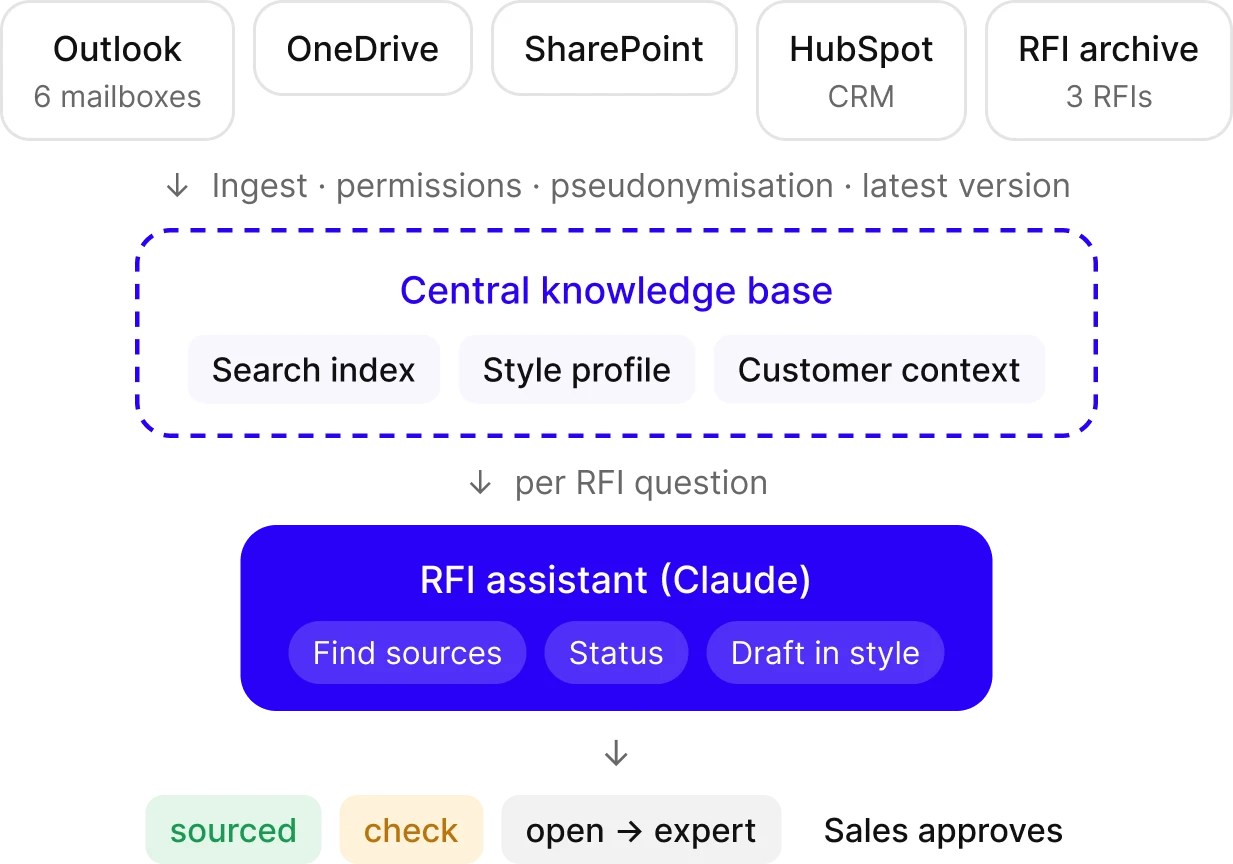
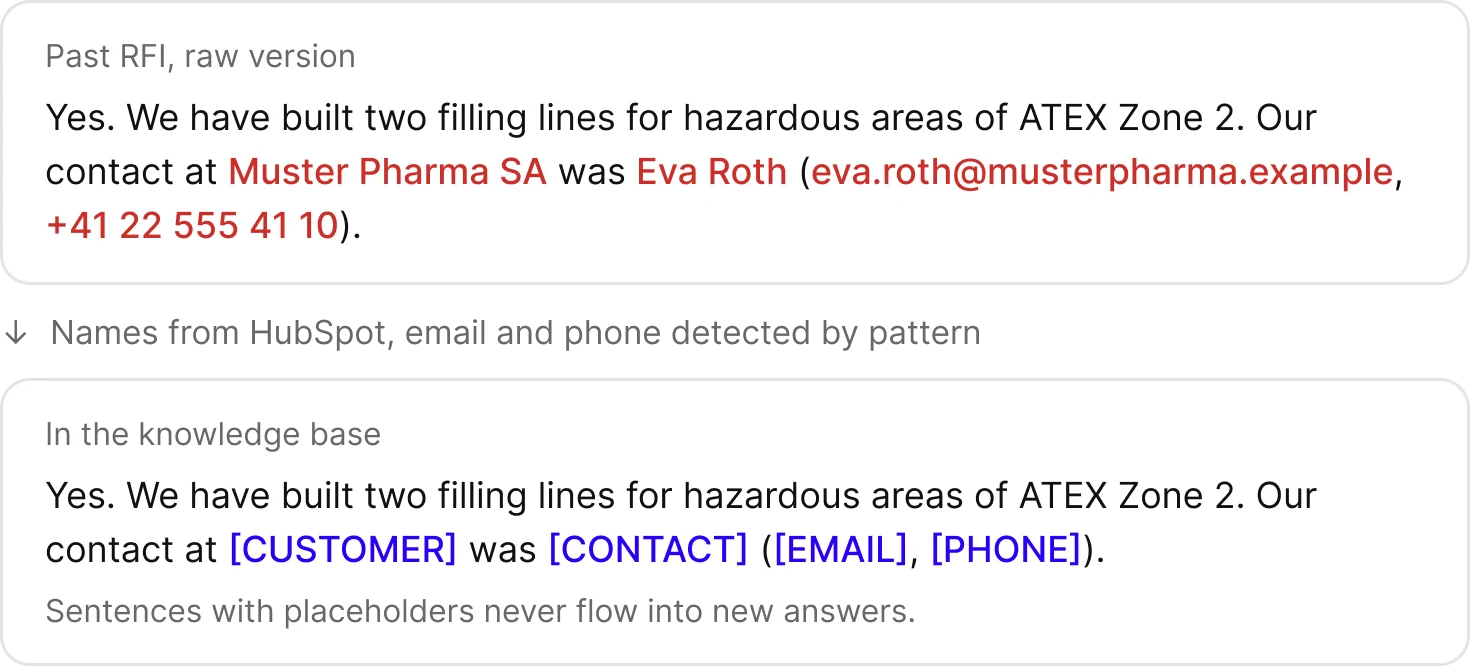
andyou built a central knowledge base that brings together emails from employees’ mailboxes, documents from OneDrive and SharePoint and customer data from HubSpot. Previously answered RFIs are ingested and pseudonymised in the process: customer names, contact persons and contact details are replaced. From this archive, the assistant derives the answer style. For each new RFI, it finds the right sources per question, prefers the latest version, drafts an answer and marks its status: sourced, check or open. HubSpot provides the customer context and highlights the topics that matter most to the customer.
Permissions & approval
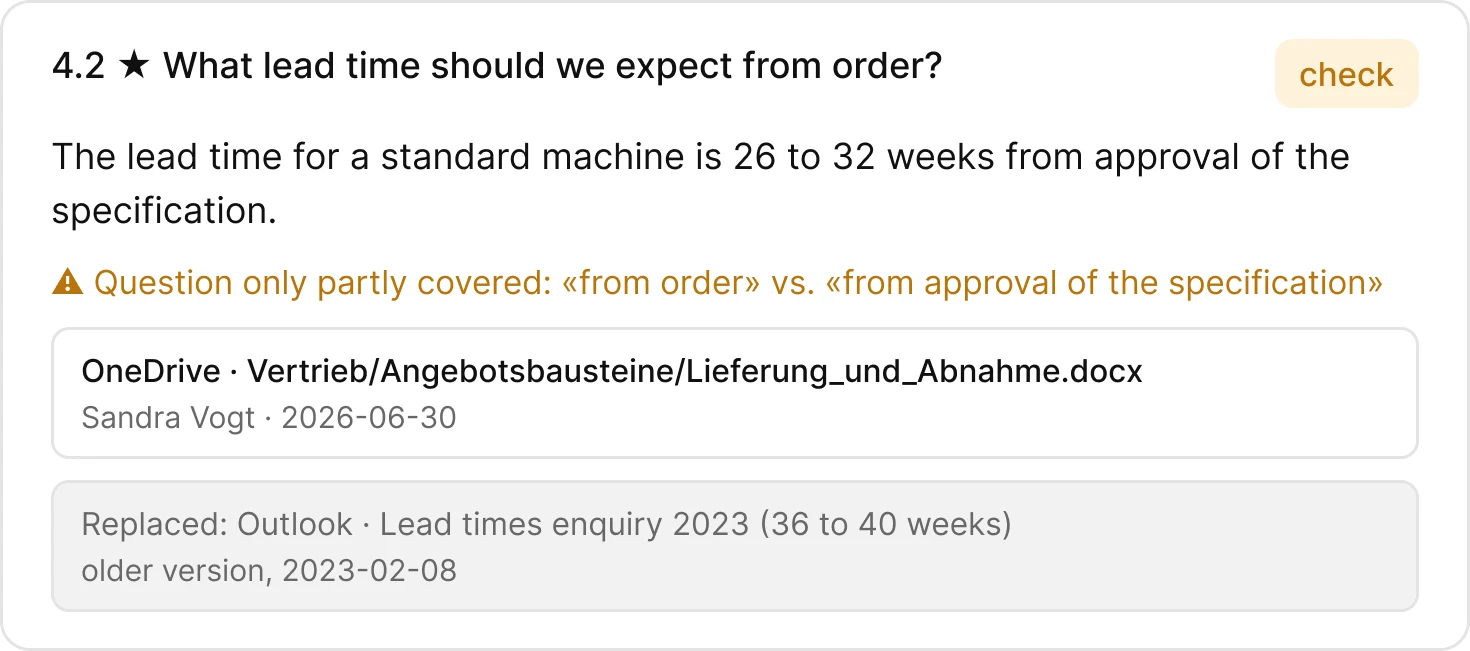
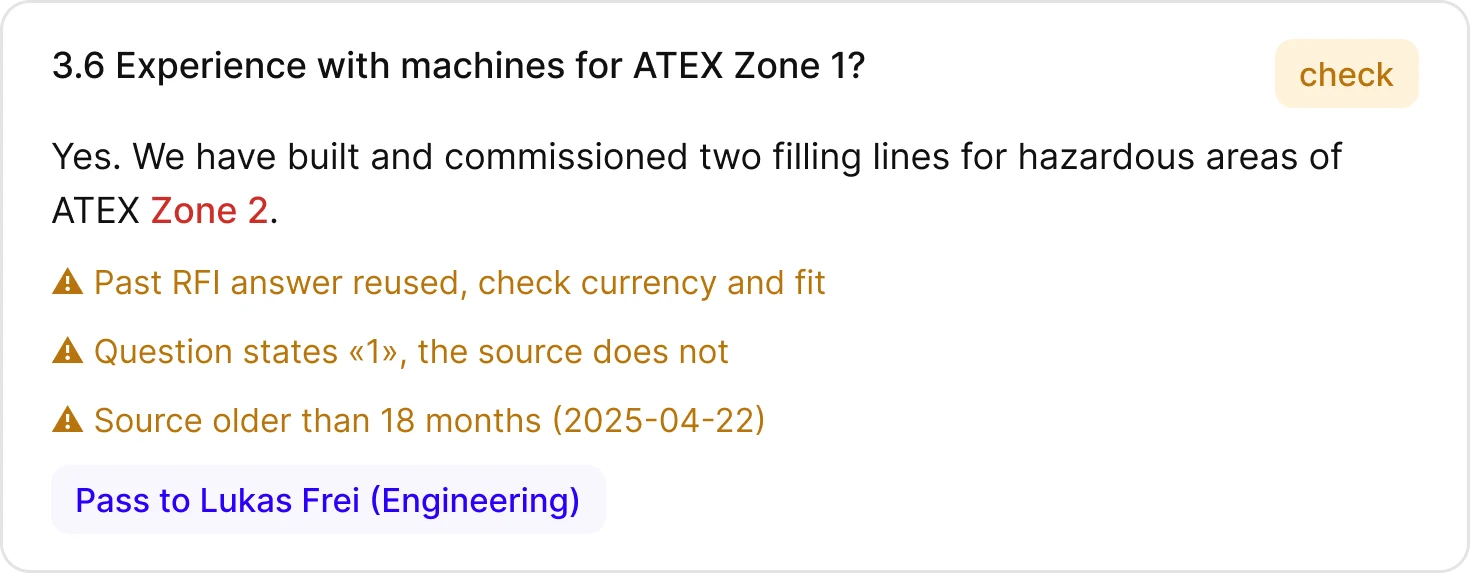
The knowledge base adopts the access rights of the employees. Confidential folders such as costing or HR are blocked: if blocked information matches, sales only sees a note, never the content. Outdated versions are shown as replaced, such as the 2022 ISO 9001 certificate or a lead time from the chip shortage. Past RFI answers count as a suggestion for review when no current source exists. If a question names a figure that is missing from the source, such as ATEX Zone 1 instead of Zone 2, it is flagged. Sales approves every answer.
Result and cost
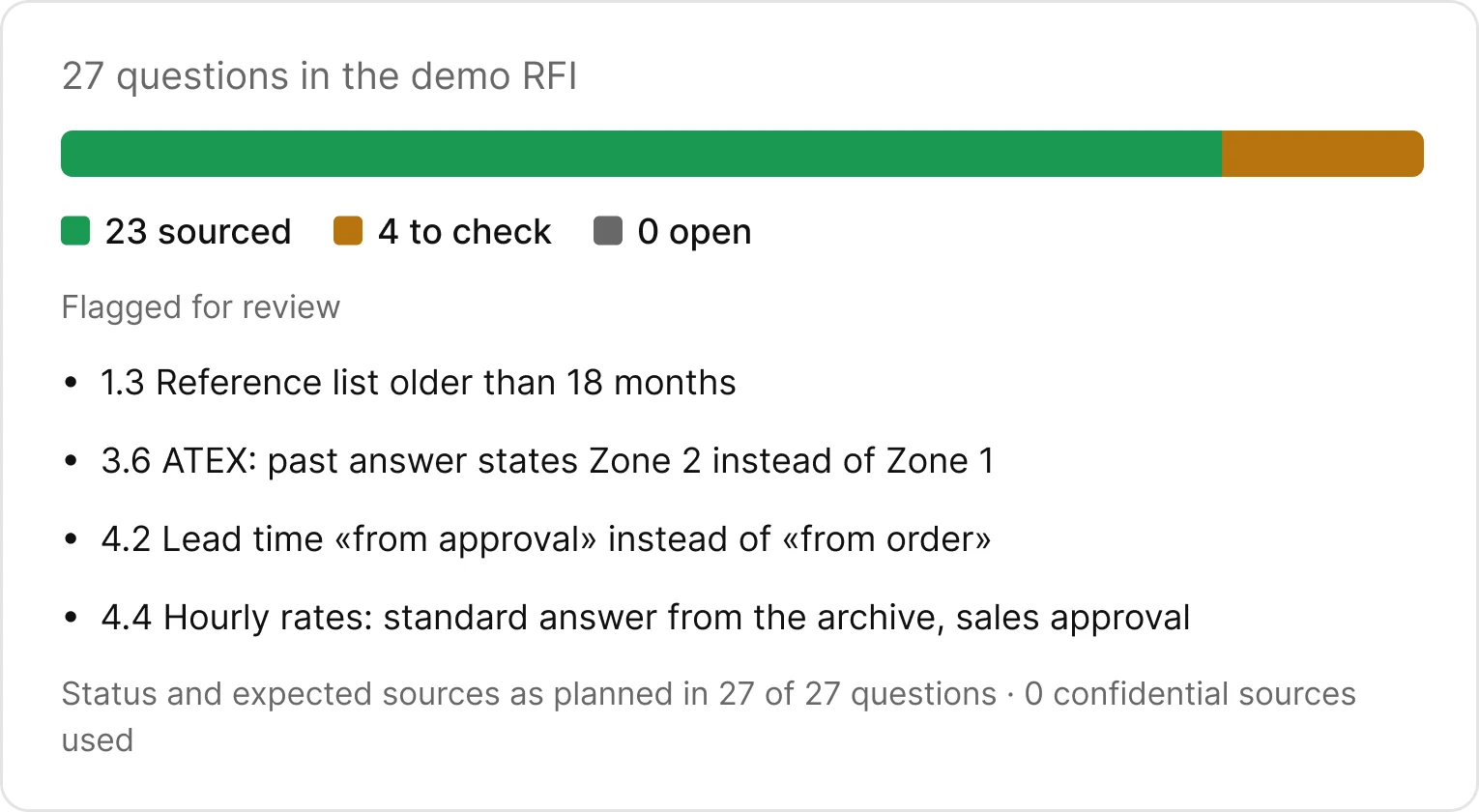
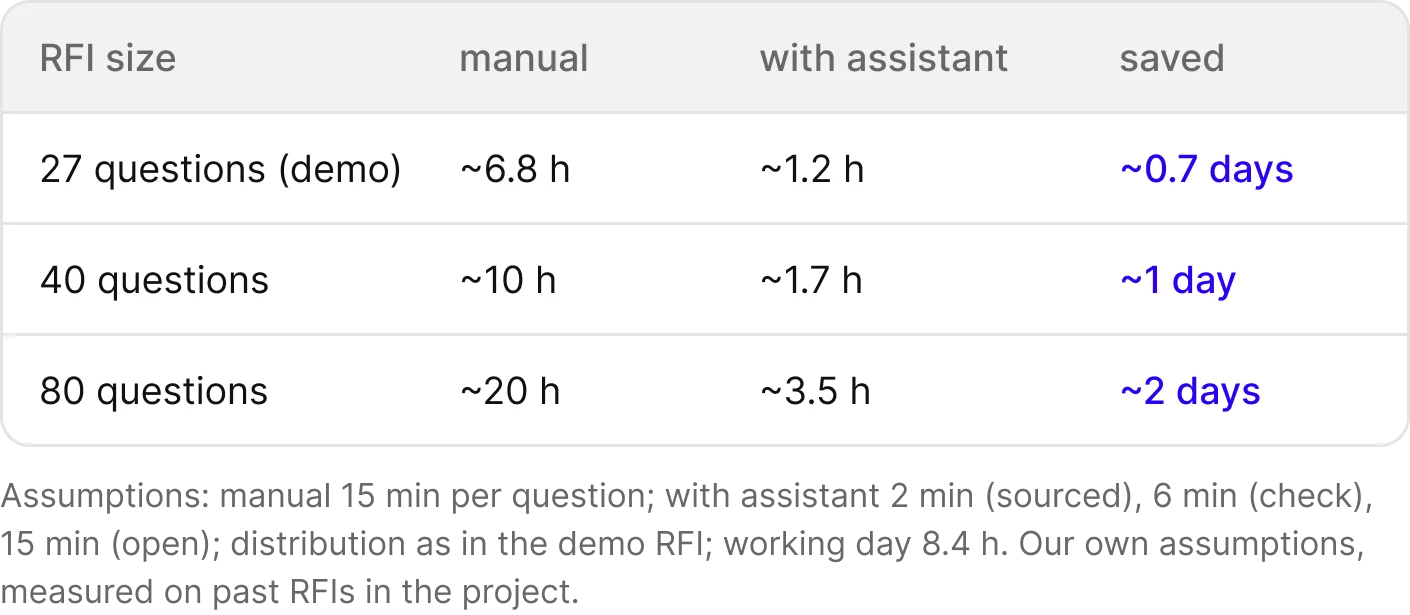
In the demo RFI from a pharma customer with 27 questions, 23 answers were backed by current sources and 4 were flagged for review; status and sources matched the expected result in all 27 questions. No confidential document made it into an answer. The model calculation assumes 15 minutes of research per question without the assistant and 2 to 6 minutes of review with it: for an RFI with 40 questions that saves around one working day, for 80 questions around two. The assumptions are measured against previously answered RFIs in the project. 10 automated tests cover pseudonymisation, blocking, versions and approval.
Technology in brief
In the project, the sources are connected through Microsoft Graph and the HubSpot API and kept up to date. The search works at sentence level and recognises German compound words and technical synonyms; in production, a semantic search is added. Claude drafts the answers through the Anthropic API with structured output and may only tighten the status, never loosen it. The knowledge base and index run in Microsoft 365 or with a Swiss hosting provider.
- Microsoft Graph
- Outlook · OneDrive · SharePoint
- HubSpot API
- Claude API
- Pseudonymisation
- Source references
- Swiss hosting
- Human approval
Make your company knowledge usable for RFIs?
Using an RFI you have already answered, we measure how much an assistant can prepare with your sources.
Let’s talk about your project