


Case study · Privacy & pseudonymisation
Answering customer enquiries with AI without disclosing personal data
- Area
- Privacy & secure operations
- Scenario
- Customer service of a Swiss SME (demo data)
- Technology
- Node.js, Claude API, AES-256-GCM
- Deployment
- Trust zone in Switzerland, approval by staff
Starting point
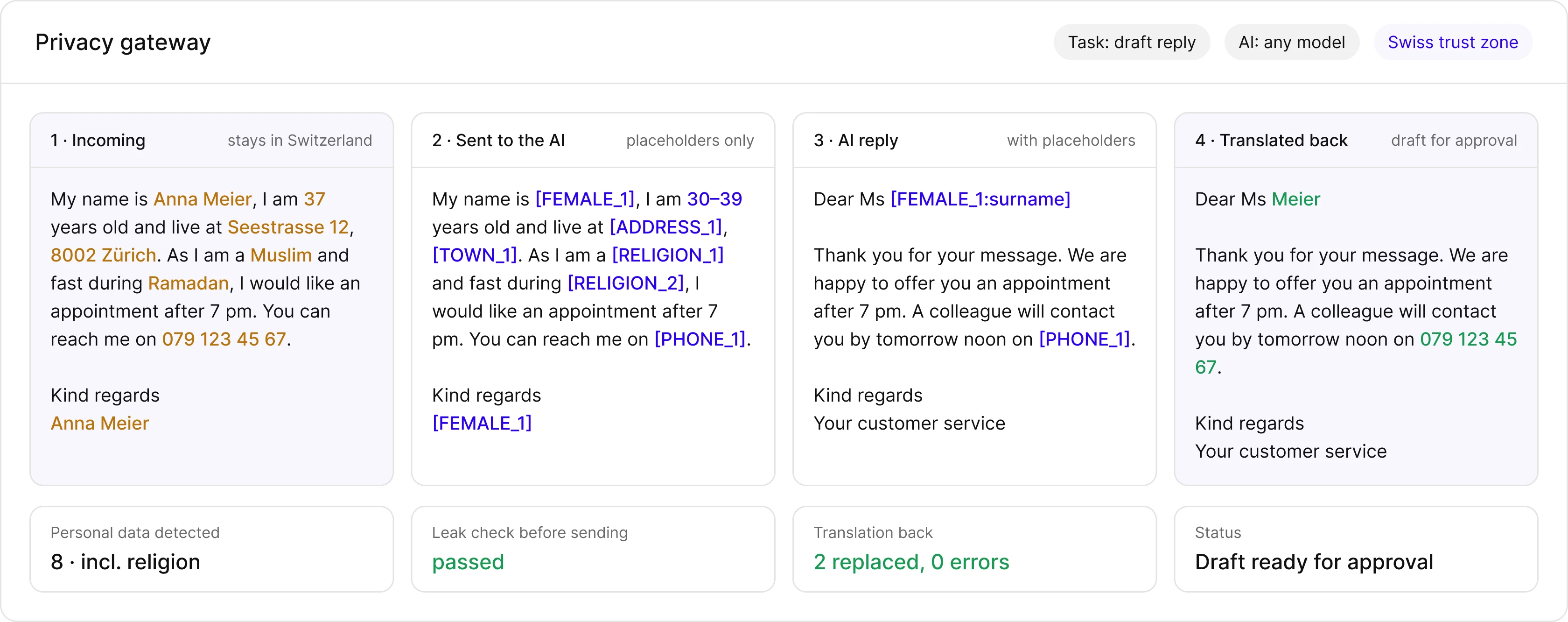
In the reference scenario, the customer service team of a Swiss SME receives emails every day that an AI is meant to pre-sort and answer. These messages contain names, phone and AHV (social security) numbers, IBANs and addresses, and time and again health information or religious reasons for a preferred appointment. Swiss data protection law requires data minimisation and privacy by design, and particularly sensitive data should not reach an AI provider unnecessarily. At the same time, the reply must still go correctly to the right person in the end.
The solution
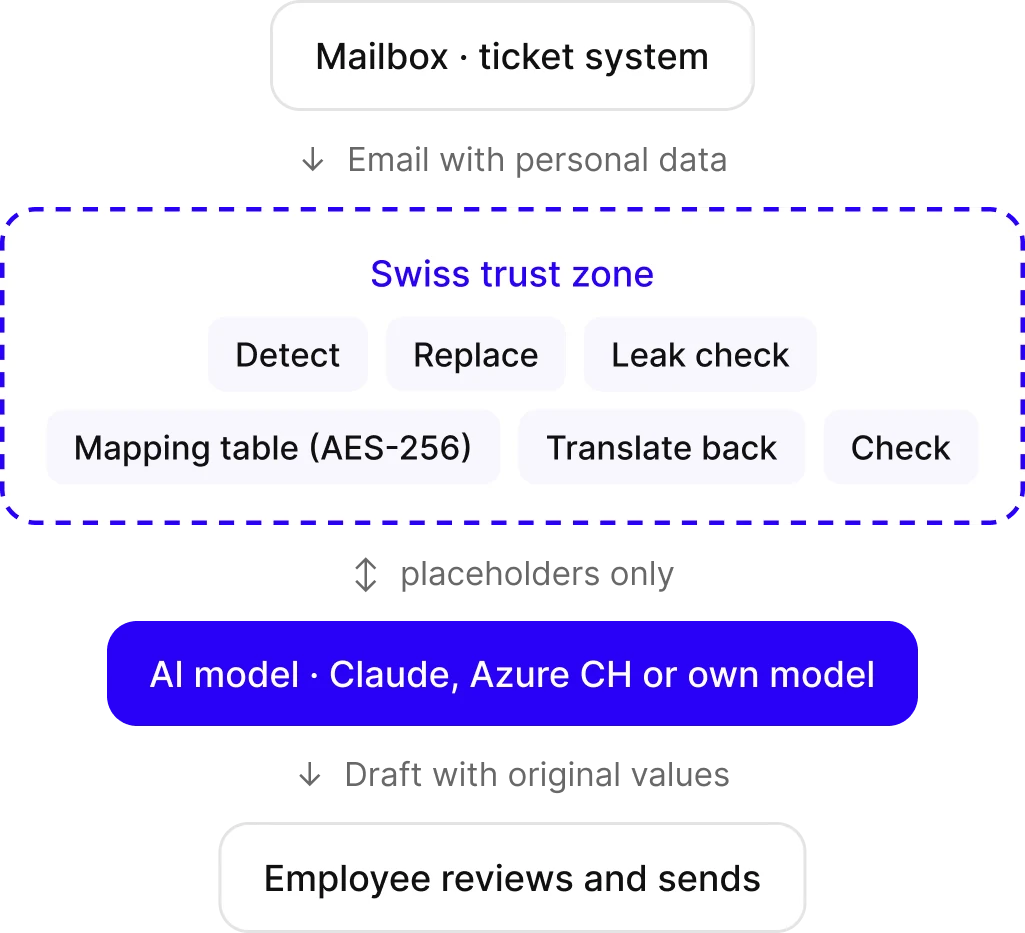
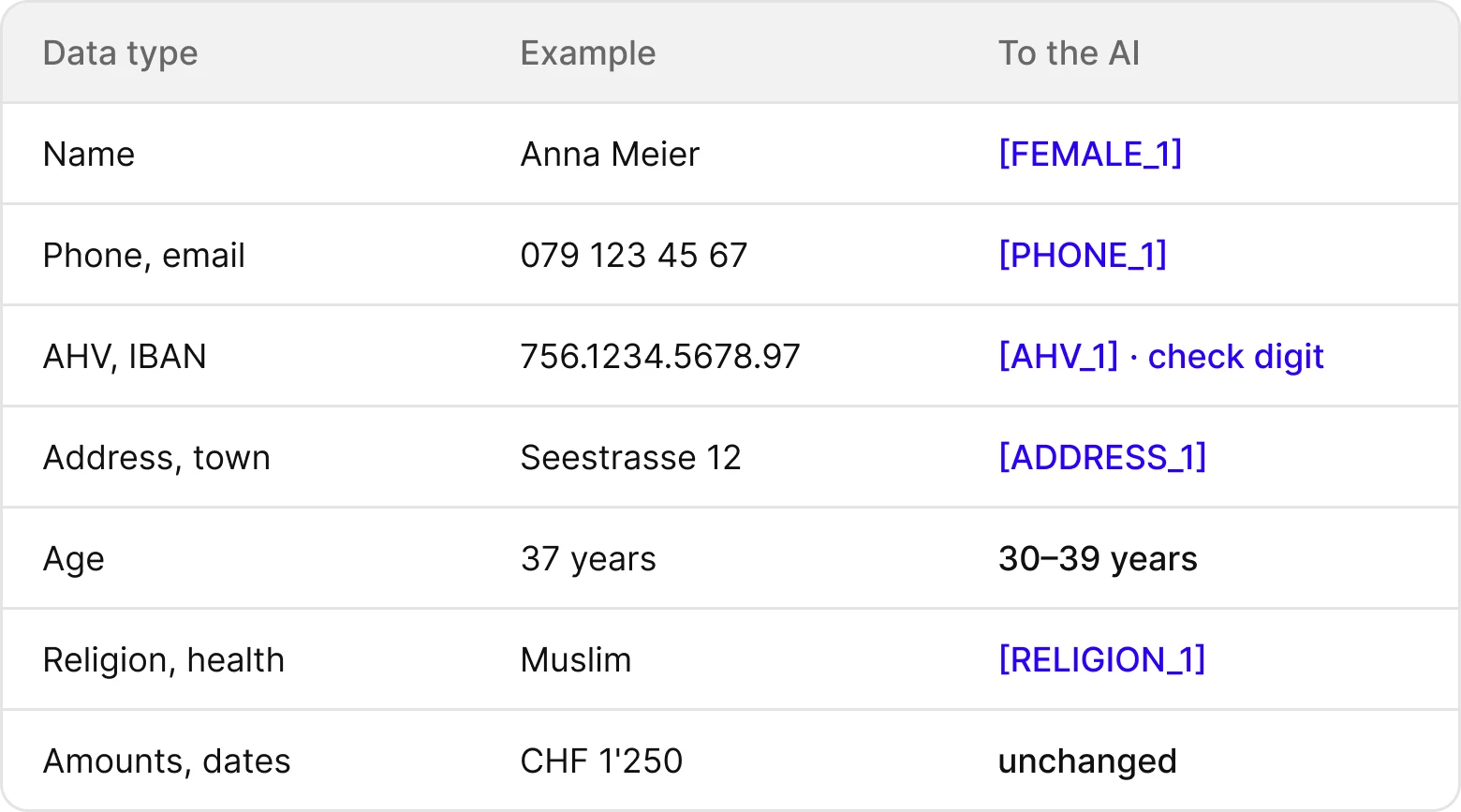
andyou built a privacy gateway that sits between the mailbox and the AI. It detects personal data in two stages: patterns with check digits for AHV numbers, IBANs and Swiss phone numbers, plus rules for names from salutation, signature and sender. All spellings of a person get the same placeholder, and the gender is kept for the salutation. Age becomes a range; religion and health reach the AI only as a category. The mapping table is stored encrypted in Switzerland and expires. After the AI, the gateway puts the original values back, even when the reply is streamed.
Security & controls
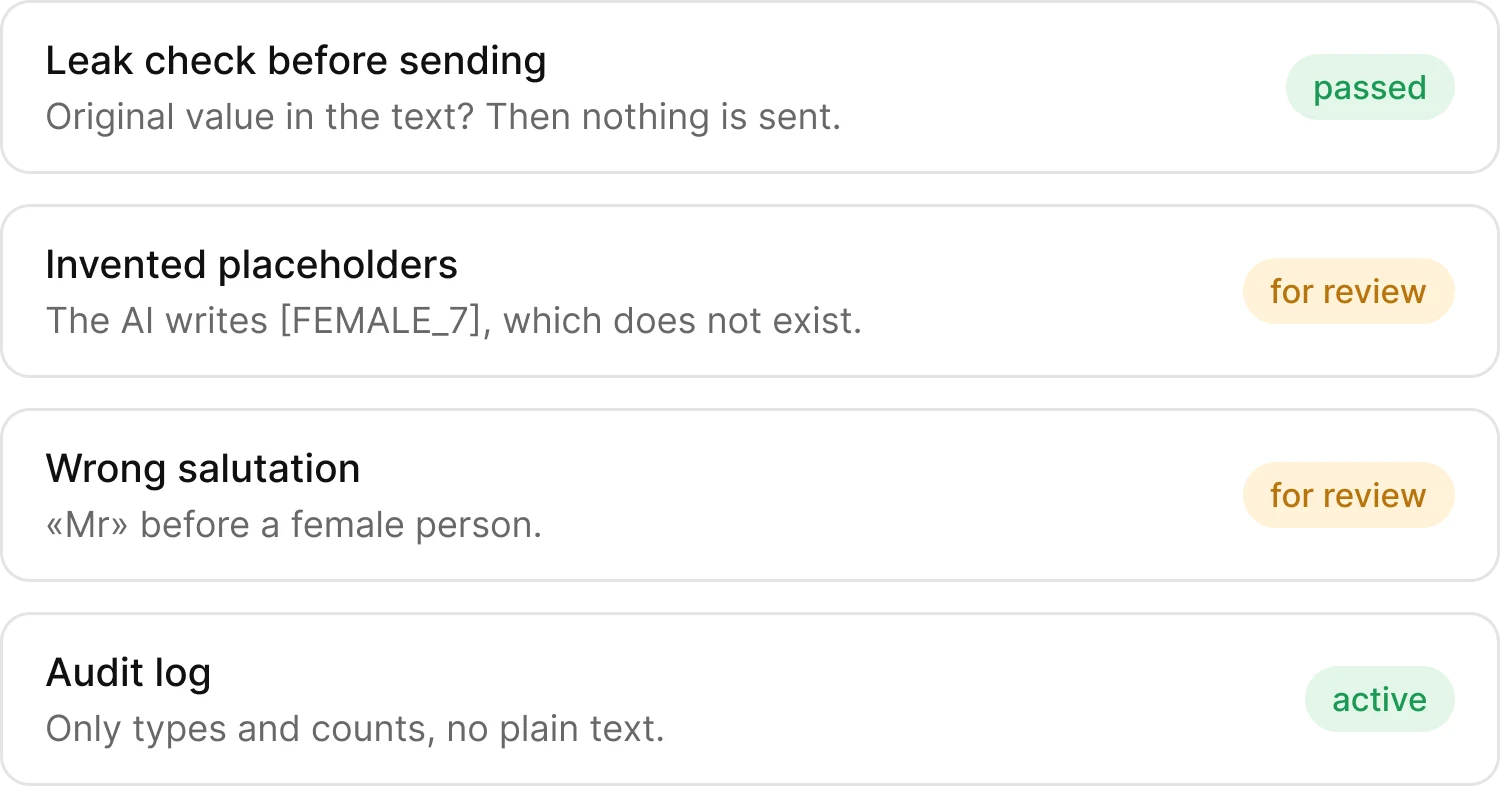
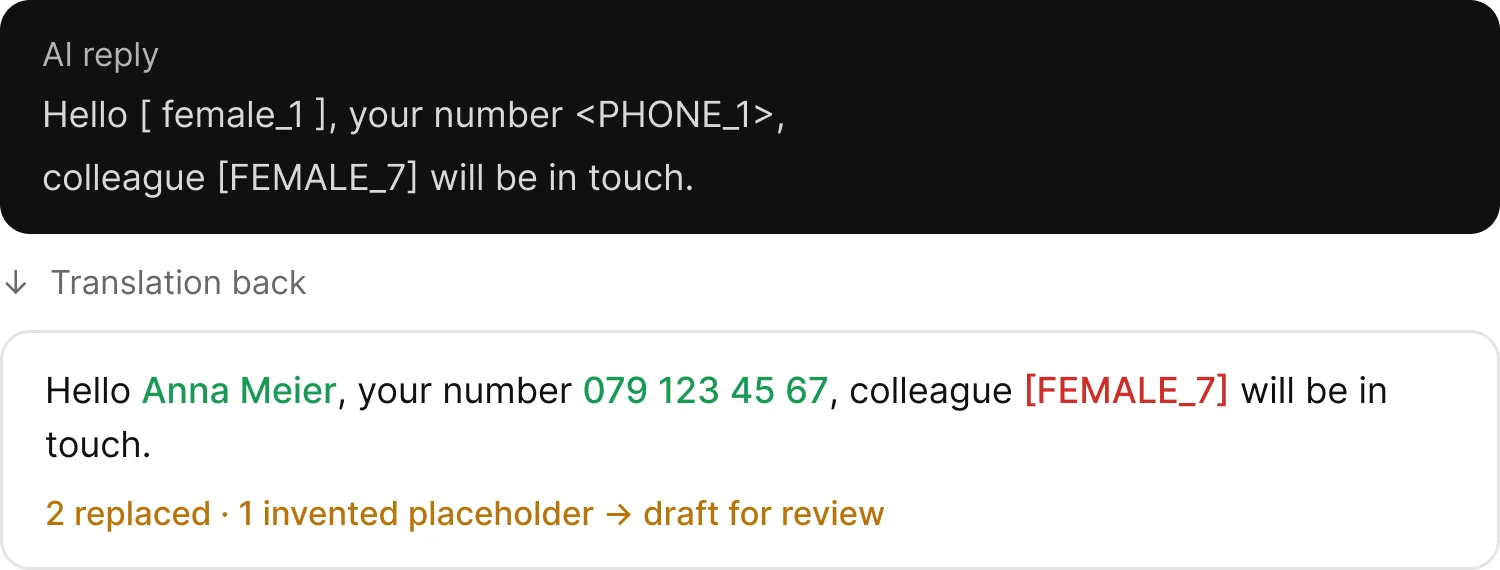
Before a text goes to the AI, a second, independent control checks whether an original value or a number is still in it. If so, nothing is sent. On the way back, the gateway detects when the AI invents a placeholder or a salutation does not match the gender, and flags the draft for review. Quoted older messages are not sent at all. Only data types and counts are logged, never plain text. Every draft is approved by an employee.
Result and cost
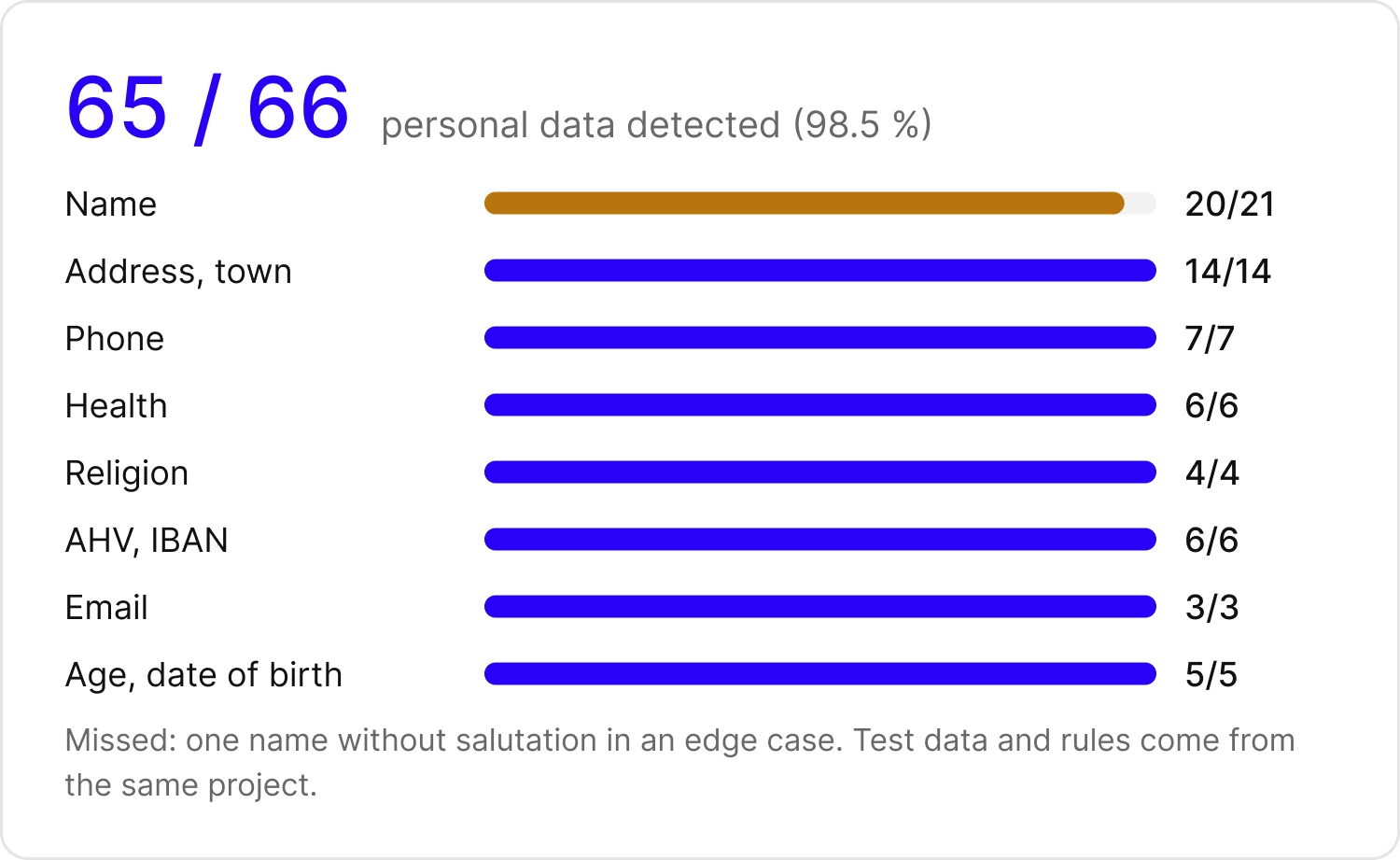
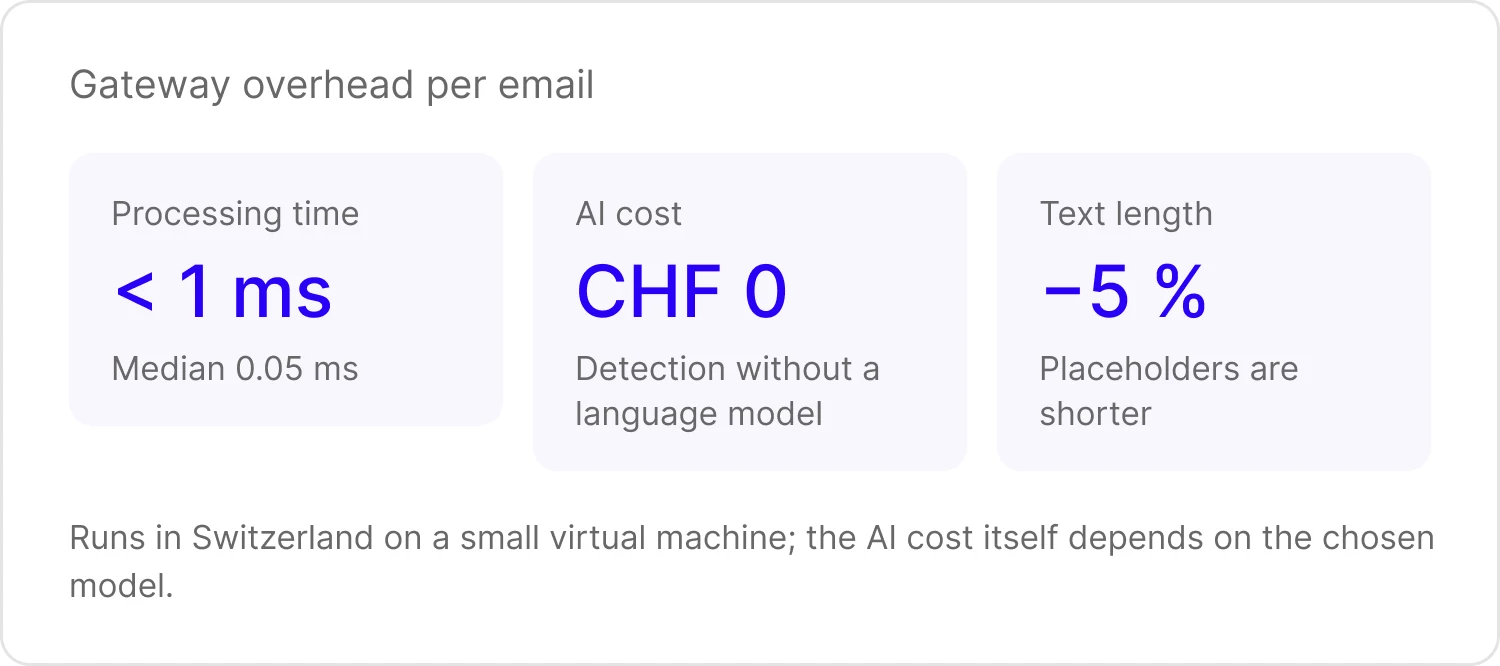
In a test with ten Swiss emails from insurance, home care, HR, fiduciary, municipality, bank, retail, administration and a law firm, the gateway detected 65 of 66 personal data items. It missed one name without a salutation in a deliberately difficult edge case; an additional local detection model is planned for this in the project. All placeholders were translated back correctly. Detection needs no language model, runs in well under a millisecond per email and adds no AI cost. 13 automated tests cover detection, encryption, streaming and approval.
Technology in brief
The gateway is a lean Node.js application without external services for detection. The mapping table is encrypted with AES-256-GCM and expires after a set time. Claude is connected as the AI through the Anthropic API; depending on the risk class, a model in Switzerland or on your own infrastructure can be used. For production, a local detection model for names, the connection to Microsoft 365 or the ticket system and a key in key management are added.
- Node.js
- Claude API
- AES-256-GCM
- Regex + check digits
- Streaming
- revFADP
- Swiss hosting
- Human approval
Protect customer data and still use AI?
Using your sample emails, we check which data needs which protection and show you in a proof of concept.
Let’s talk about your project